System thesis
Case study
LLM Steering Lab
Activation-space behavior control workbench for local open-source SLMs, with pre/post hook comparison and explainable experiment controls.
Primary evidence: Hugging Face + PyTorch
At a glance
- Method
- ActAdd-style steering vectors
- Intervention
- Pre-activation and post-activation hooks
- Product layer
- FastAPI API plus React workbench UI
RuntimeHugging Face + PyTorch
UIVite + React + TypeScript workbench
EvidenceWorkbench GIFs, hook diagrams, method docs
System problem
Why this system exists.
LLM control work can become vague when reduced to prompt examples. This lab treats behavior steering as reproducible experiments, model registries, hook points, UI controls, and documented limitations.
Implementation surface
What was built.
- Activation steering starter kit.
- FastAPI workbench API and React UI.
- Research notes and model support matrix.
Architecture
A system map for the project.
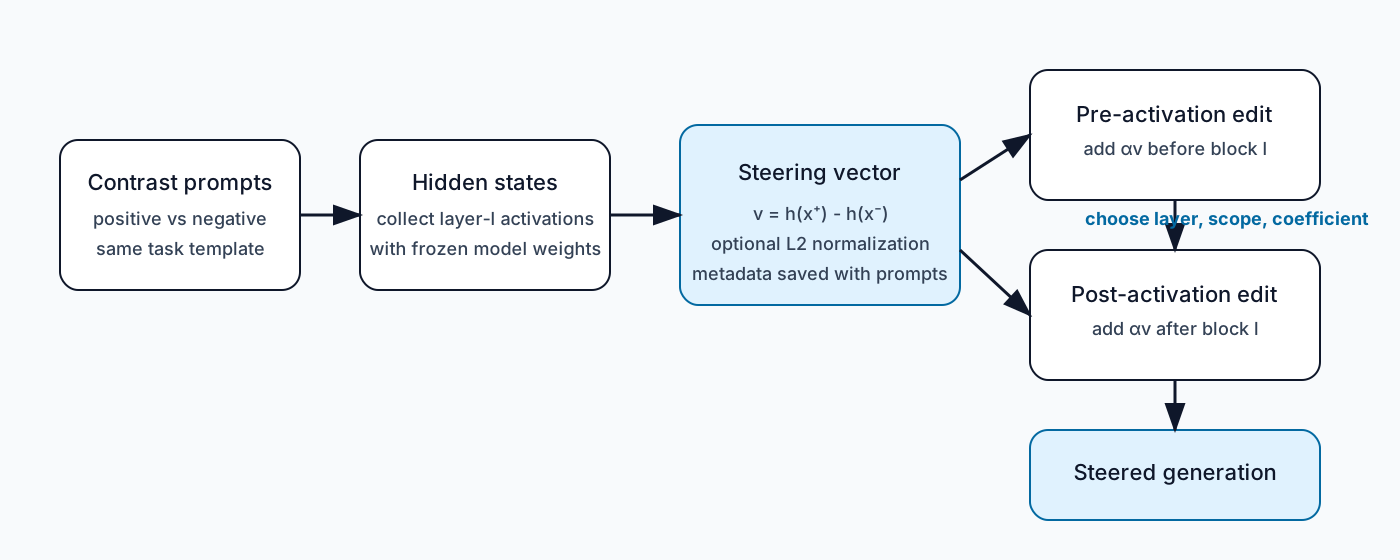
Prompt-pair data -> steering-vector extraction -> model registry -> activation hook -> comparison run -> FastAPI workbench -> React controls.
A model-internals diagram that exposes prompt pairs, vector extraction, hook placement, comparison runs, and workbench review.
Experiment Design
positive promptnegative promptbehavior preset
Representation Work
hidden statessteering vectorlayer + coefficient
Intervention Site
pre-hookpost-hookresidual stream
Workbench
FastAPIReact UIbaseline vs steered
How it works
Input, transformation, model or agent logic, and reviewable output.
Prompt-pair setup
Positive and negative examples create a direction in activation space for the behavior being studied.
Vector extraction
The workbench supports ActAdd-style steering vectors and metadata that explain layer, coefficient, and hook stage.
Hook comparison
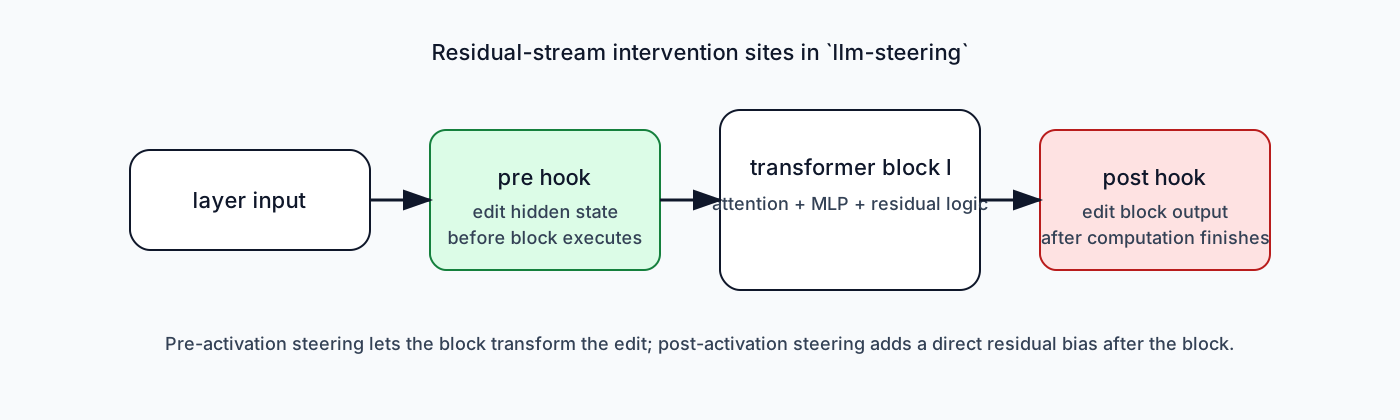
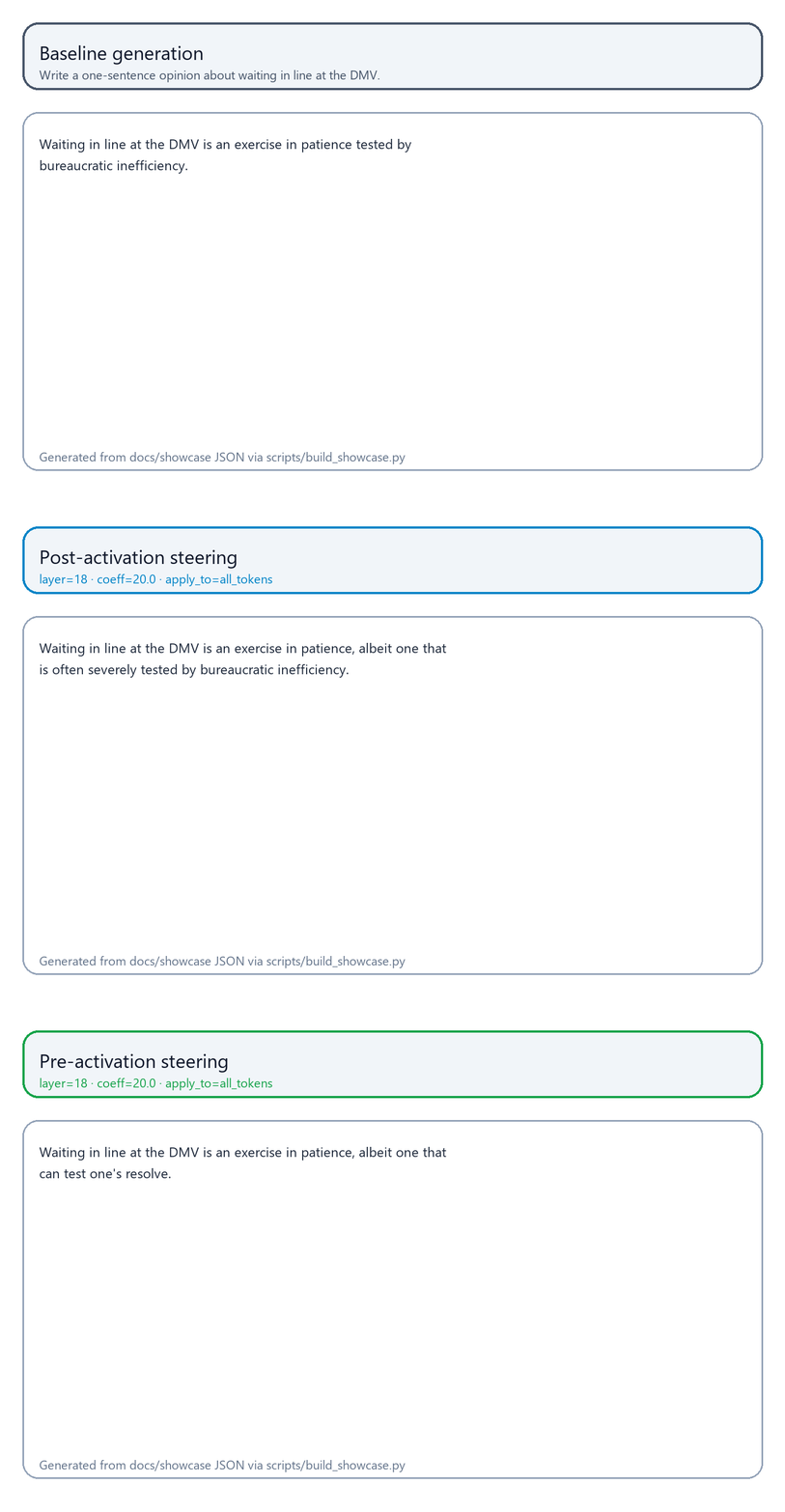
Pre-activation and post-activation hooks are compared because the same direction can behave differently depending on where it enters the model.
Workbench review
FastAPI and React turn the method into an operational console with model support states and result comparison.
Evidence
Screenshots, responses, diagrams, tests, and model tables from the source repos.
Artifacts are included only where the public repo has enough context to show them safely.
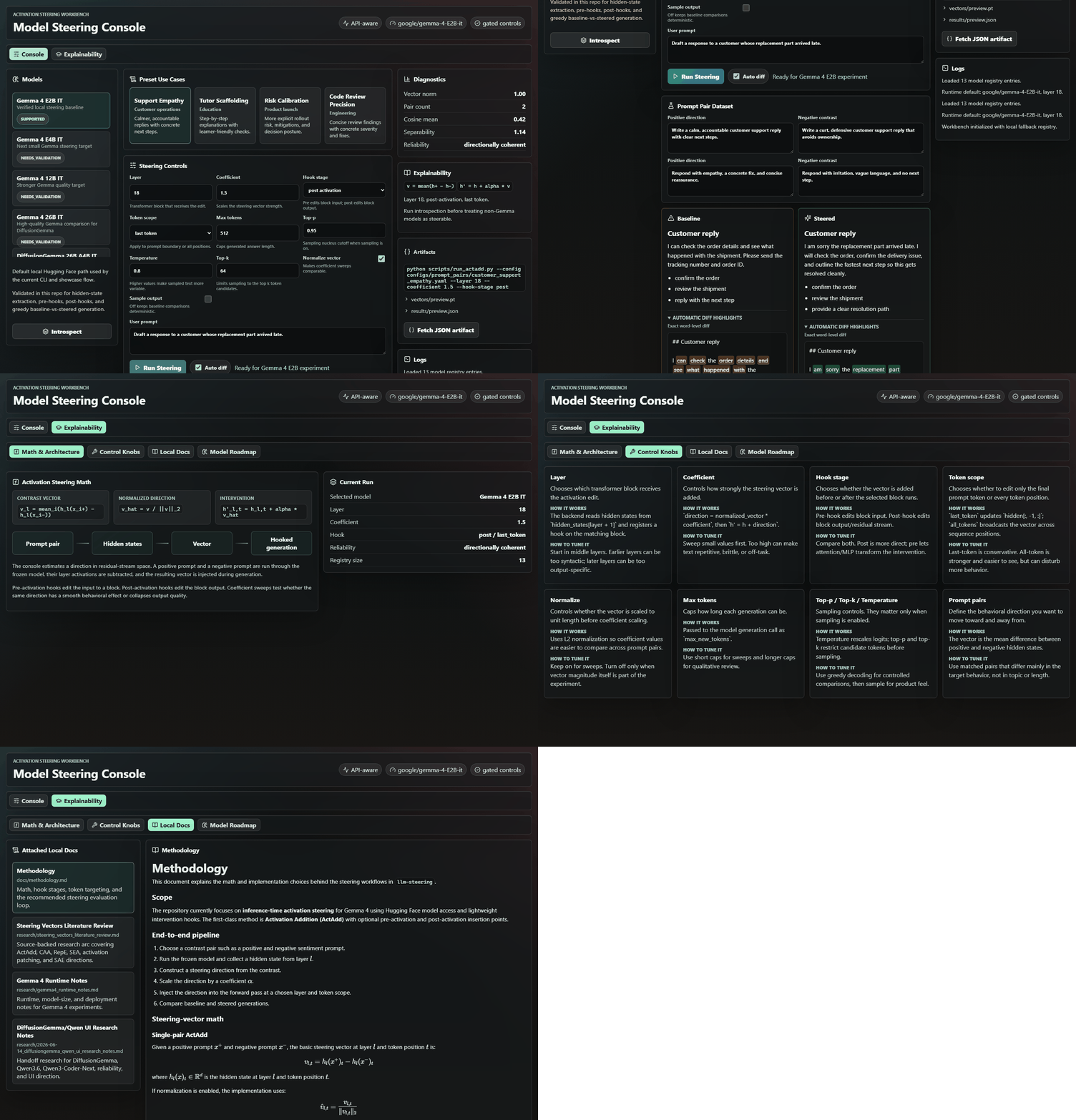
Workbench UI overview
Activation steering workflow
Pre/post hook locations
Pre-vs-post comparison demo
Engineering Decisions
Local-first research path
The system keeps model experimentation local while still making UI/API contracts explicit.
Explain limitations visibly
Unsupported models and unvalidated routes are shown rather than hidden behind optimistic controls.
Research-to-product bridge
The project makes the math, hook sites, prompts, and outputs visible in one loop.
Validation / reliability
How the system is made reviewable.
- Python source, scripts, and tests compile.
- Full model runs depend on local model availability.
- Safety gates and unsupported-model limitations are documented.
- FastAPI experiment API.
- React/TypeScript controls.
- Local model execution for privacy-sensitive experimentation.
Limits / responsible use
Research engineering lab with public artifacts and explicit limitations. It is not a production model-safety guarantee.
- Workbench artifacts expose prompt pairs, vector extraction, hook choices, and baseline comparisons.
- Unsupported routes and model-specific fragility are visible rather than hidden behind optimistic controls.
- The lab demonstrates research tooling and does not claim a production model-safety guarantee.
Repository
Open the source repo and inspect the implementation boundary.
All public examples are synthetic, sanitized, historical, or research/demo implementations. No PHI, PII, employer-confidential data, proprietary claims data, private keys, production credentials, or sensitive datasets are included.